
CN
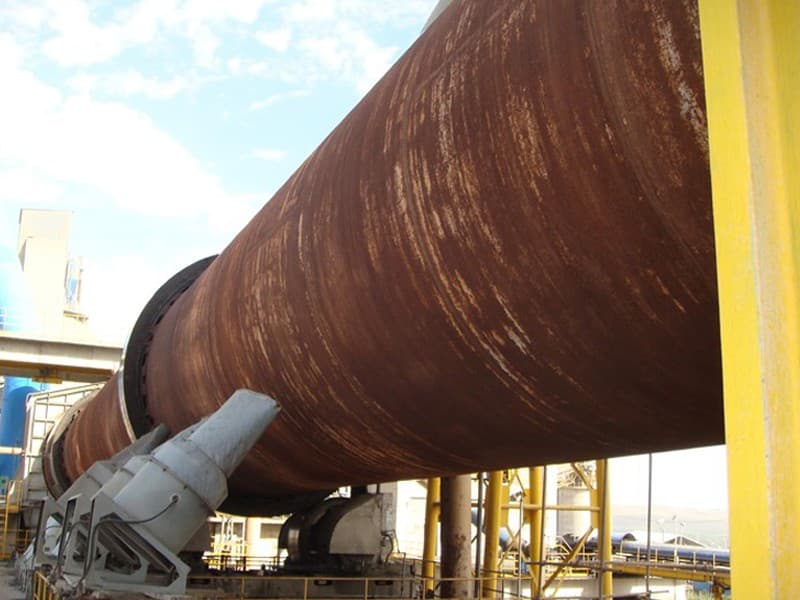
Rotary kiln refers to rotary calcining kiln (commonly known as rotary kiln), which belongs to cement building materials equipment, widely used in cement, metallurgy, building materials, chemical industry, environmental protection and other fields.
Production capacity:
180-10000t/dMotor power:
55-2×950KWTotal weight:
149.61-1659tRotary kiln refers to rotary calcining kiln (commonly known as rotary kiln), belongs to cement building materials equipment, widely used in cement, metallurgy, building materials, chemical industry, environmental protection and other fields, with simple structure, high operation rate, convenient and reliable production process control, high quality of kiln products, less wearing parts. Rotary kilns are divided into variable diameter rotary kilns and through diameter rotary kilns according to their appearance, and can be divided into cement kilns, metallurgical chemical kilns and lime kilns according to different materials. Cement kiln is mainly used for calcining cement clinker, divided into dry production of cement kiln and wet production of cement kiln two categories. Metallurgical and chemical kilns are mainly used for magnetization roasting of lean iron ore in iron and steel plants in metallurgical industry. Oxidation roasting of chromium and nickelite; Refractory plant calcined high alumina vanadite ore and aluminum plant calcined clinker and alumina hydroxide; Chemical plant roasting chromium ore and chromium ore powder and other minerals. Lime kiln (i.e. active lime kiln) is used for roasting active lime and light burned dolomite for iron and steel plants, ferroalloy plants, etc. Users can choose the appropriate type of equipment according to the actual material needs.
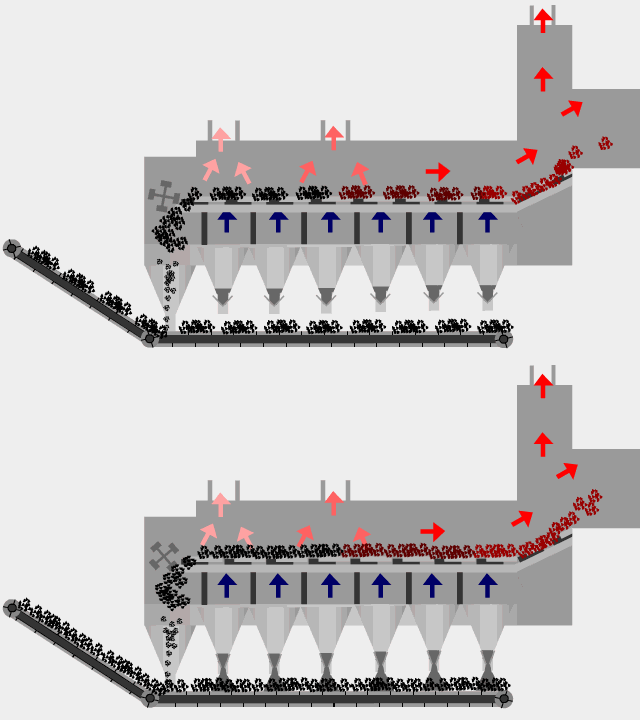
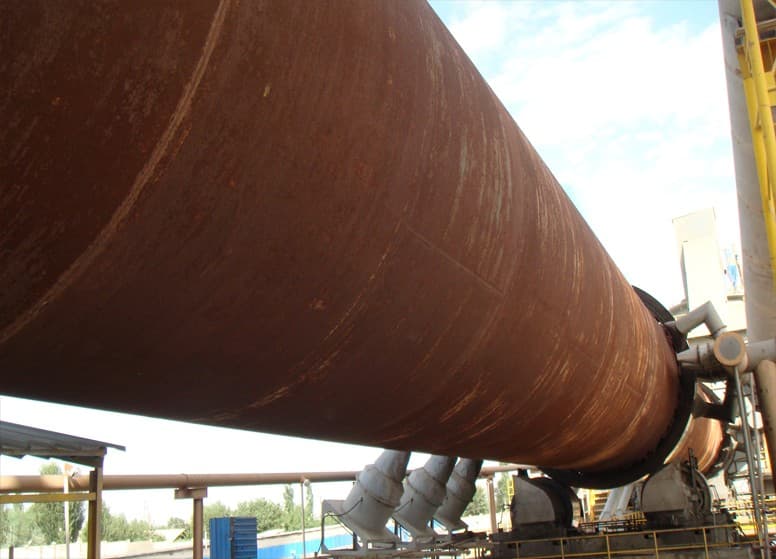
The main structure of rotary kiln is composed of kiln head, kiln tail, cylinder, supporting device, motor and driving device. Among them, the supporting device is 3 groups of rollers, the kiln is provided with an expanding belt at the end, and the cylinder is lined by high aluminum brick and magnesia chrome brick.
The rotary kiln is a cylinder with a certain inclination, the inclination is 3 ~ 3.5%, and the rotation of the kiln promotes the mixing of materials in the rotary kiln, so that the materials mix with each other and react in contact. Coal injection combustion at kiln head generates a lot of heat, which is transmitted to the material by flame radiation, hot gas convection, kiln brick conduction, etc. The material moves forward in the kiln depending on the inclination of the kiln barrel and the rotation of the kiln.
| Model | Kiln body size | Motor power(kw) | Gross weight(t) | ||||
| Diameter(m) | Length(m) | Slope(%) | Capacity(t/d) | Rotational speed(r/min) | |||
| Φ2.5×40 | 2.5 | 40 | 3.5 | 180 | 0.44-2.44 | 55 | 149.61 |
| Φ2.5×50 | 2.5 | 50 | 3 | 200 | 0.62-1.86 | 55 | 187.37 |
| Φ2.5×54 | 2.5 | 54 | 3.5 | 280 | 0.48-1.45 | 55 | 196.29 |
| Φ2.7×42 | 2.7 | 42 | 3.5 | 320 | 0.10-1.52 | 55 | 198.5 |
| Φ2.8×44 | 2.8 | 44 | 3.5 | 450 | 0.437-2.18 | 55 | 201.58 |
| Φ3.0×45 | 3 | 45 | 3.5 | 500 | 0.5-2.47 | 75 | 201.94 |
| Φ3.0×48 | 3 | 48 | 3.5 | 700 | 0.6-3.48 | 100 | 237 |
| Φ3.0×60 | 3 | 60 | 3.5 | 800 | 0.3-2 | 100 | 310 |
| Φ3.2×50 | 3.5 | 50 | 4 | 1000 | 0.6-3 | 125 | 278 |
| Φ3.3×52 | 3.3 | 52 | 3.5 | 1300 | 0.266-2.66 | 125 | 283 |
| Φ3.5×54 | 3.5 | 54 | 3.5 | 1500 | 0.55-3.4 | 220 | 363 |
| Φ3.6×70 | 3.6 | 70 | 3.5 | 1800 | 0.25-1.25 | 125 | 419 |
| Φ4.0×56 | 4 | 56 | 4 | 2300 | 0.41-4.07 | 315 | 456 |
| Φ4.0×60 | 4 | 60 | 3.5 | 2500 | 0.396-3.96 | 315 | 510 |
| Φ4.2×60 | 4.2 | 60 | 4 | 2750 | 0.41-4.07 | 375 | 633 |
| Φ4.3×60 | 4.3 | 60 | 3.5 | 3200 | 0.396-3.96 | 375 | 583 |
| Φ4.5×66 | 4.5 | 66 | 3.5 | 4000 | 0.41-4.1 | 560 | 710.4 |
| Φ4.7×74 | 4.7 | 74 | 4 | 4500 | 0.35-4 | 630 | 849 |
| Φ4.8×74 | 4.8 | 74 | 4 | 5000 | 0.396-3.96 | 630 | 899 |
| Φ5.0×74 | 5 | 74 | 4 | 6000 | 0.35-4 | 710 | 944 |
| Φ5.6×87 | 5.6 | 87 | 4 | 8000 | Max4.23 | 800 | 1265 |
| Φ6.0×95 | 6 | 95 | 4 | 10000 | Max5 | 950×2 | 1659 |