
CN
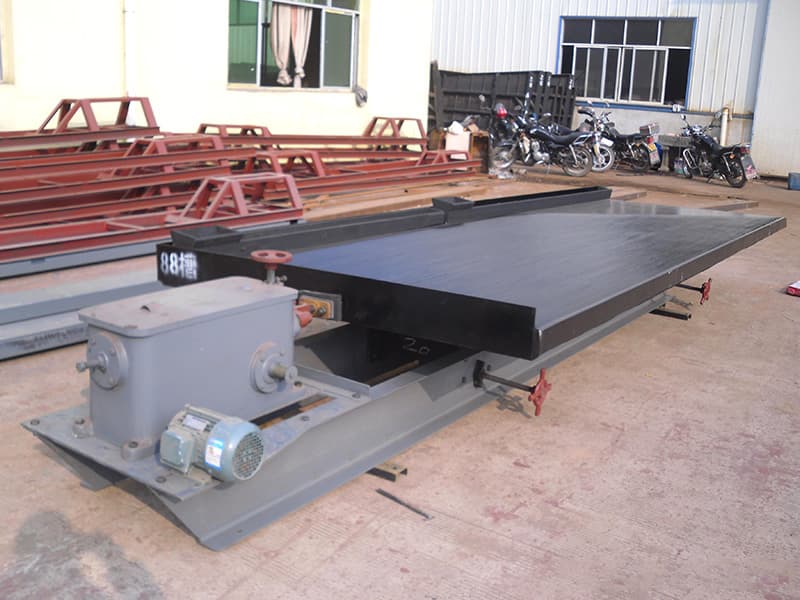
Shaker is a gravity beneficiation equipment for the separation of fine grained materials, used in cement, silicate products, new building materials, refractories, fertilizers, black and non-ferrous metal beneficiation and glass ceramics and other production industries.
Feed size:
≤2mmOre supply:
10-60t/dApplicable materials:
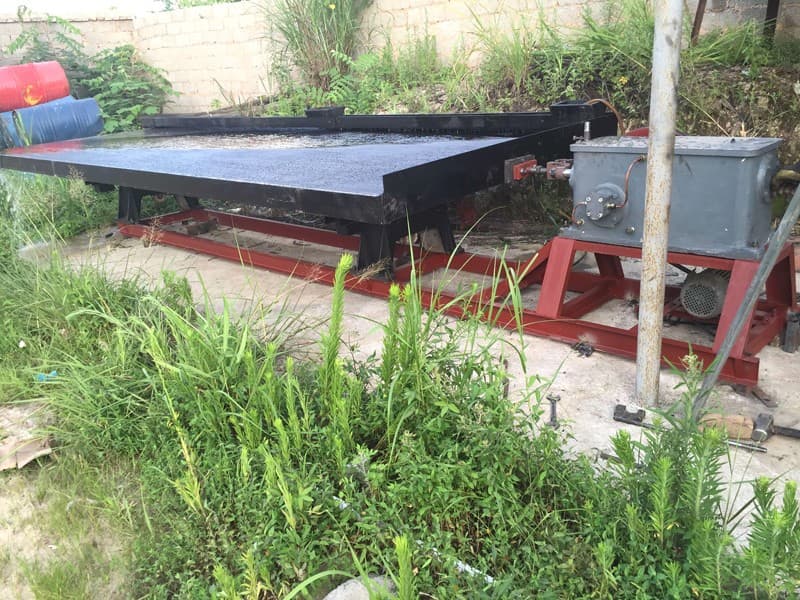
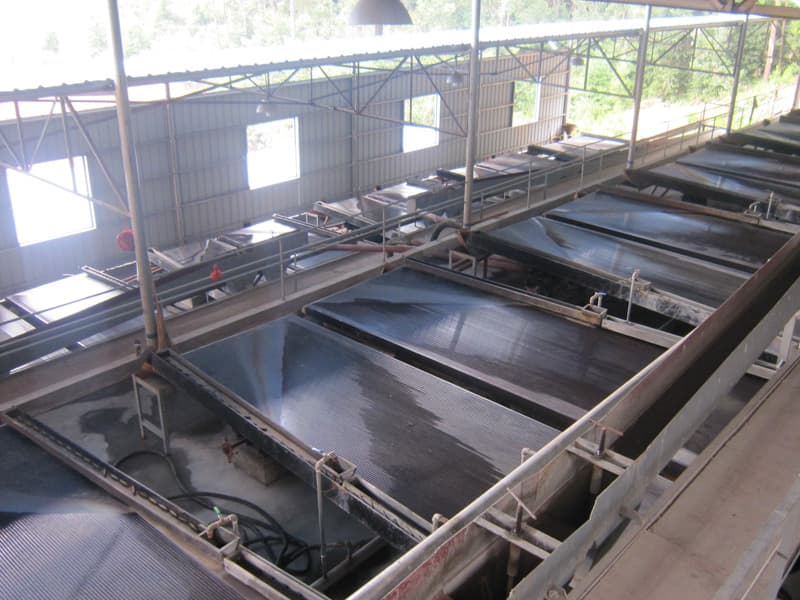
Widely used in sorting tin, tungsten, gold, silver, lead, zinc, tantalum, niobium, iron, manganese, ferrotitanium and coal.Shaker is a gravity beneficiation equipment for the separation of fine grained materials, which is widely used in the separation of tin, tungsten, gold, silver, lead, zinc, tantalum, niobium, iron, manganese, ilmenite and coal. Beneficiation shaker is usually composed of three parts: bed surface, frame and transmission mechanism. In addition, there are flushing water tank, feed tank, machine base, etc., the whole bed is supported or lifted by the rack, and the rack is equipped with slope adjustment device. The beneficiation shaker can make the ore particles move in different directions according to its density and particle size, and fan out diagonally from the feed tank, discharge along the edge of the bed in turn, and the discharge line is very long, which can produce a variety of products with different quality, such as concentrate, secondary concentrate, middle concentrate and tailings. Beneficiation shaker is used as gravity separation equipment, which has been widely used in the separation of placer gold and other minerals, mainly for gold or coal separation. Our factory has a long history of producing shakers, and constantly develop and innovate, from the initial straight bed shaker to the single wave bed shaker (in the 1970s); To the double curved wave bed shaker (in the 1990s), the capacity, recovery and enrichment ratio of the shaker have been greatly improved.
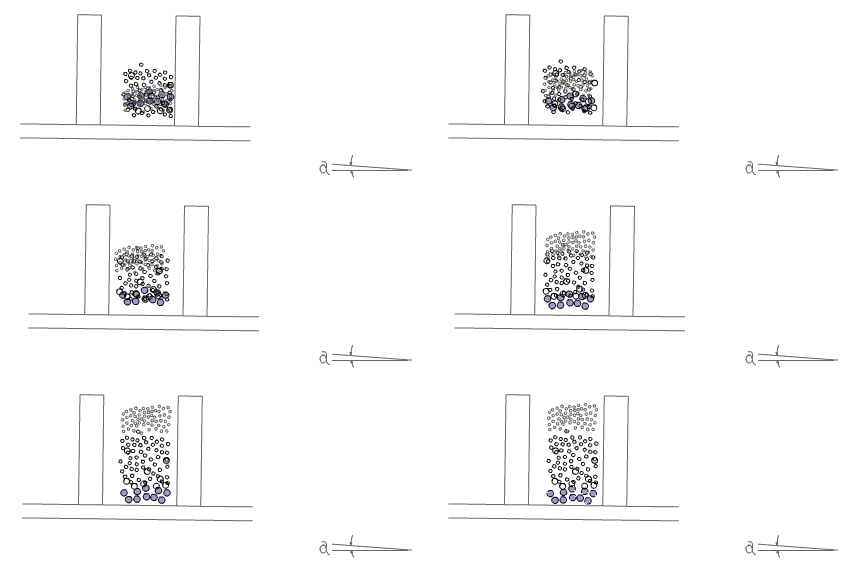
The shaker is mainly composed of eight parts: head, motor, slope shifter, bed surface, trough, sink, strip and lubrication system.
The reciprocating motion is realized through the crank and connecting rod type transmission mechanism. The motor drives the crankshaft rotating rocker through the belt drive, and the rocker moves up and down. When the rocker moves down, the elbow plate pushes the rear shaft and the reciprocating rod to move backward. The spring is compressed and the bed is connected through the linkage seat and the reciprocating rod, so the bed is also moved backward at this time. The bed surface then moves forward.
| Name | Coarse sand shaker | Fine sand shaker | Slime shaker | |
| Bed size | Length(mm) | 4450 | 4450 | 4450 |
| Drive end width(mm) | 1855 | 1855 | 1855 | |
| Concentrate end width(mm) | 1546 | 1546 | 1546 | |
| Maximum feed size(mm) | 2 | 0.5 | 0.15 | |
| Ore supply(t/d) | 30-60 | 10-20 | 15-25 | |
| Feed concentration(%) | 25-30 | 20-25 | 15-25 | |
| Journey(mm) | 16-22 | 11-16 | 8-16 | |
| Frequency(f) | 45-48 | 48-53 | 50-57 | |
| Bed surface cleaning water(t/d) | 80-150 | 30-60 | 10-17 | |
| Horizontal slope of bed surface(Degree) | 2.5-4.5 | 1.5-3.5 | 1-2 | |
| Longitudinal slope of bed surface(%) | 1.4 | 0.92 | ---- | |
| Bed surface tip out Angle(Degree) | 32-42 | 40 | 42 | |
| Beneficiation area(㎡) | 7.6 | 7.6 | 7.6 | |
| Bed length ratio | 2.6 | 2.6 | 2.6 | |
| Bed surface end shape | Rectangle | Zigzag | Triangle | |
| Motor power(kw) | 1.1 | 1.1 | 1.1 | |
| Driving mechanism | Eccentric linkage | |||