

CN
Hematite, magnet, iron ore
200t/h
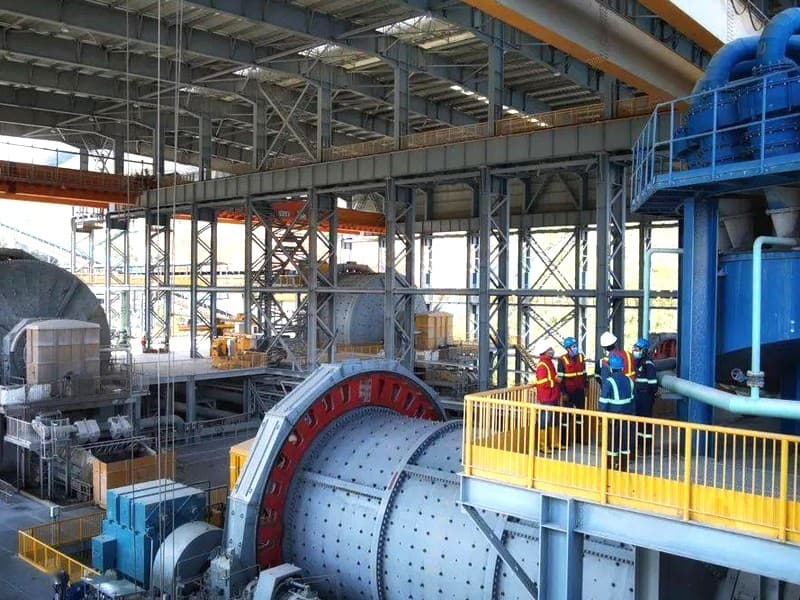
PE jaw crusher (coarse crushing) jaw crusher (fine crushing)ball mill
Hematite is iron oxide, which is heavy and hard. Hematite contains up to 70% iron and can be produced in large quantities, so it is a relatively important iron ore.
Because of the ultra-high iron content of hematite, it is regarded by the old iron in Pakistan, want to buy a hematite ore dressing production line for iron extraction, with the Internet platform to find the global Heavy machinery, after communication and understanding for the old iron in Pakistan designed a simple and convenient mineral processing production line, let's take a look!
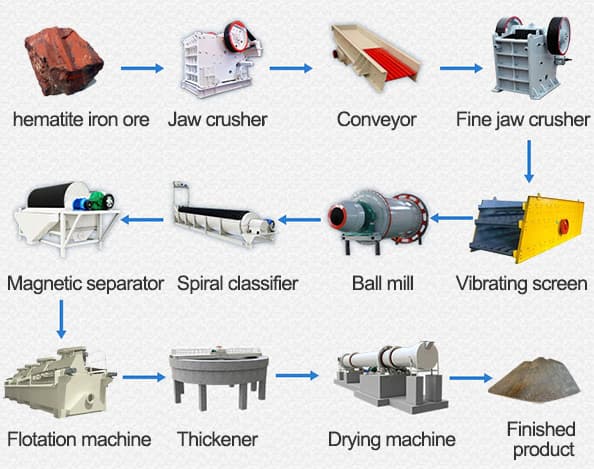
Main equipment configuration: PE jaw crusher (coarse crushing), PEX jaw crusher (fine crushing), ball mill, magnetic separator, flotation machine;
Auxiliary equipment configuration: feeder, vibrating screen, conveyor, spiral classifier, thickener, dryer.
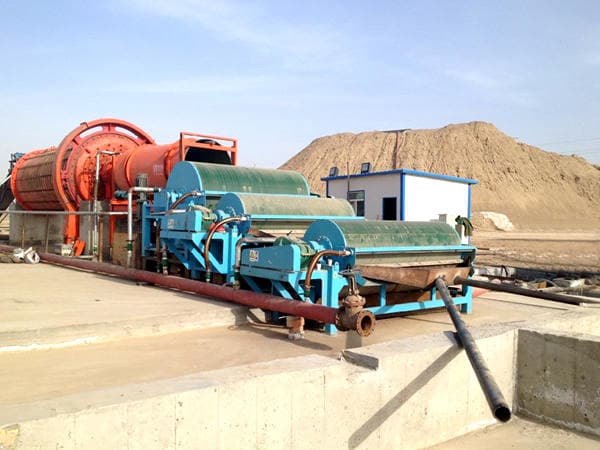
The mined bulk hematite is sent to the jaw crusher by the feeder for preliminary rough crushing treatment, and then transported to the fine jaw breaking by the conveyor for fine crushing processing. The finely crushed material is sifted through the vibrating screen, the sieve is qualified, and the material that meets the feeding demand of the ball mill is sent to the ball mill for grinding, and the unqualified material is returned to the fine jaw to break and be broken again. The small hematite particles grinding by the ball mill enter the spiral classifier for classification. The spiral classifier cleans and classifies the ore mixture by virtue of the principle that the specific gravity of the solid particles is different and the precipitation rate in the liquid is different. The mineral mixture after washing and grading is separated by magnetic separator according to the different magnetic coefficient of the mixture through magnetic and mechanical force. The mineral particles after preliminary separation by magnetic separator are sent to the flotation machine, and the correct flotation agent is added, so that the minerals are separated from other substances, the material is separated, contains a lot of water, so it must be concentrated by the concentrator, and then dried by the dryer, you can get dry and useful minerals.
1, stage grinding, reduce the amount of subsequent operations, reduce the cost of mineral processing
Ball mill and cyclone are used to form closed-circuit grinding, which can ensure both efficiency and granularity. At the same time, some qualified concentrate can be separated in advance. And through the high gradient magnetic separator can discard some low-grade tailings, which can reduce the amount of ore regrinding, but also avoid over-grinding, to a certain extent, reduce metal loss.
2, using magnetic separation-flotation combined process, green environmental protection
The qualified coarse concentrate and tailings are sorted out in time by magnetic separation operation, which conforms to the principle of early collection and early abandonment, and reduces the amount of flotation operation and the cost.
3, strong magnetic tail-reverse flotation process, float less and more, economically more reasonable
The high intensity magnetic separation process can recover fine iron minerals, which can play the dual role of desliming and tail dumping, and create better conditions for flotation operation. Reverse flotation process reagent system is simple, can significantly reduce the flotation reagents and other organic matter into the pulp, reduce its adverse effects on the flotation process.